Bahamas Private Island
Typology: Hospitality Architecture
Client: Private Developer
Visuals: Sabi Space
Site: Private Island, The Bahamas
Year: 2023


An eco-resort redefining sustainability as the ultimate luxury
The Bahamian island is situated at a low elevation, making it susceptible to various environmental hazards such as hurricanes, storms, floods, high salt air content, termites, and erosion.
In response to the geology and threats of the island, the design proposes to cut and elevate the buildings from the rocky, cliffed south shore, merging the accommodations with the sloping topography. The simple act of excavating and cutting construction materials at the site avoids the treacherous addition of significant weight to the island.
Walls and roofs are covered with native shrubs, making it difficult to understand where the landscape ends and the building begins.
The development employs the ingenious interweaving of architecture with nature, a gentle and sustainable approach, which attracts different tourists, curious and sophisticated.


The island offers a sustainable construction model for the development of other islands, adapting its buildings to extreme natural events and long-term climate change, protecting the island ecosystem and meeting
Net Zero Carbon targets.


Architecture shaped by
the island's natural intelligence
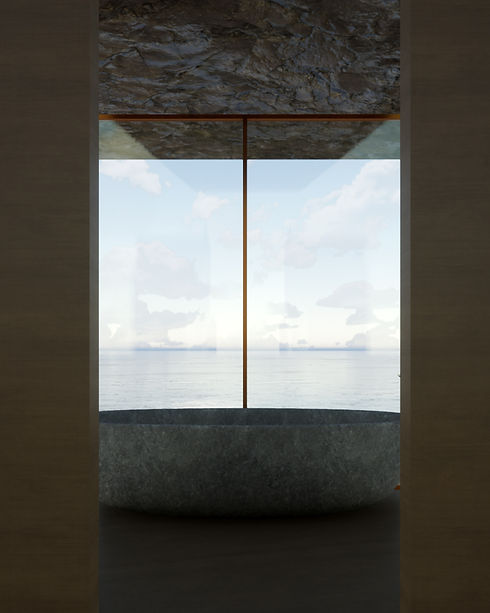
The native rock of the Bahamas is the number one construction material against extreme weather, such as heat and hurricanes. The use of thick limestone slabs as walls and roofs allows for the protection of the interior living spaces.
Two thick limestone walls ensure the protection of the interior of the buildings but also the framing of the ocean. The small constructions are all oriented towards the south and the coast, they employ floor-to-ceiling glazing which is offset and fits inside the limestone, to frame the view and to create secluded patios that offer privacy and shelter
Raising each building from the ground allows for the natural collection of rainwater into the excavation and allows for the architecture to adapt to flooding and long-term climate change. In addition, each pit is served with outlets to pump out excess water in case of extreme events.
The outdoor landscape is animated with indigenous flora and fauna. Trees play a key role in locking up carbon and strengthening the soil structure, thus fortifying the natural ecosystem.